
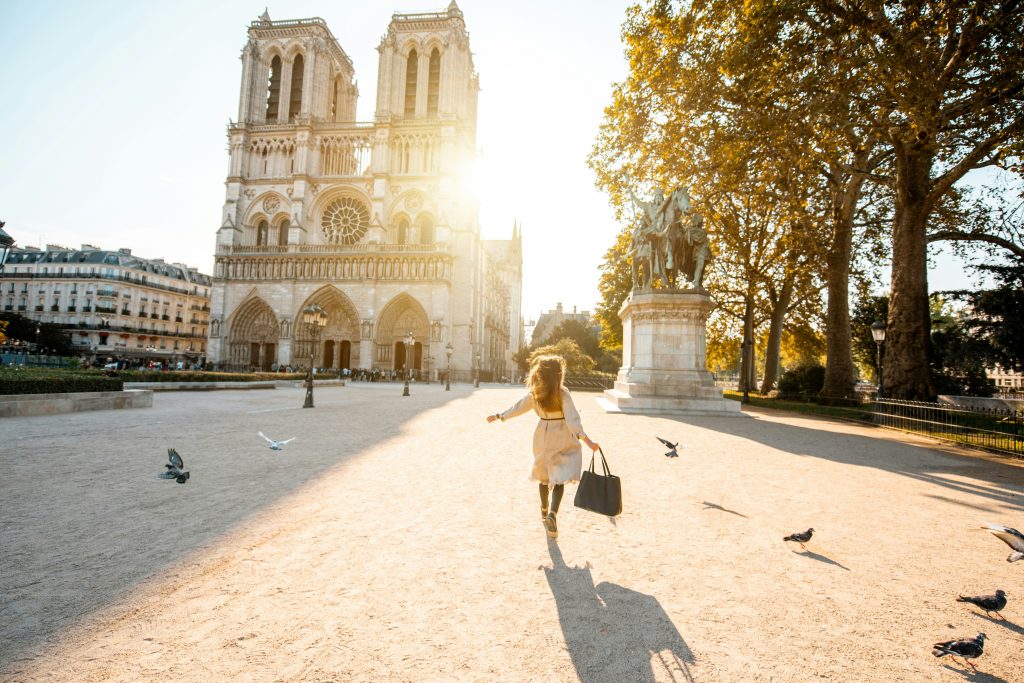
High above the Île de la Cité, the Notre Dame gargoyles Paris visitors admire seem to watch the city in silence. Perched along the cathedral’s upper levels, these stone creatures draw thousands of lenses every day. At first glance, they look like medieval monsters. In reality, their story combines engineering, symbolism, and 19th-century creativity.
When you visit Notre Dame, understanding what you see changes the experience. Instead of decorative figures, you begin to notice purpose, craftsmanship, and historical layers.
Before you continue, download our Ultimate Paris Travel Guide for curated itineraries and practical advice to help you plan your stay with confidence.
What Are the Notre Dame Cathedral Paris Gargoyles?
The Notre Dame cathedral Paris gargoyles form part of a carefully designed drainage system. The word “gargoyle” comes from the Old French gargouille, meaning throat. Builders carved these figures to channel rainwater away from the limestone walls.
When rain falls on the roof, it travels through stone conduits. Then it exits through the gargoyles open mouths, projecting water away from the façade. As a result, the cathedral’s structure stays protected from erosion and moisture damage.
You can spot these functional figures along the flying buttresses and roofline. Their dramatic shapes attract attention. At the same time, they perform a practical role that has protected the building for centuries.
Gargoyles Paris Notre Dame or Chimeras?
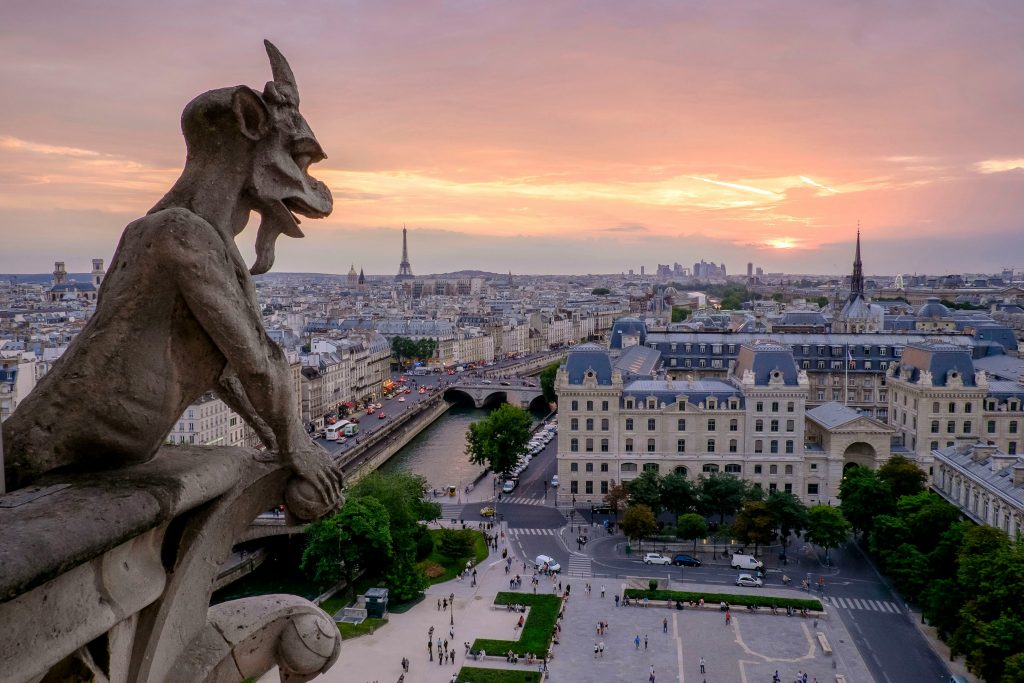
Many of the creatures people associate with the gargoyles Paris Notre Dame skyline are not true gargoyles. Instead, they are chimeras, also called grotesques.
Unlike gargoyles, chimeras do not drain water. Sculptors created them for symbolic and artistic reasons. During the 19th-century restoration, architect Eugène Viollet-le-Duc introduced many of the expressive creatures visitors admire today. He encouraged sculptors to draw inspiration from medieval imagination while adding their own interpretation.
The most famous figure, the Stryge, rests its elbows on its knees as it gazes over Paris. Because of its thoughtful pose, many call it “The Thinker.” Still, it is a chimera rather than a medieval gargoyle.
The Figures Watching Over Paris
When you picture the Notre Dame gargoyles Paris is known for, you likely imagine horned demons and winged beasts overlooking the rooftops. From the upper galleries, they appear to guard the city below.
In the Middle Ages, exterior sculptures carried moral meaning. Grotesque figures symbolized chaos and temptation. Meanwhile, the sacred interior represented order and protection. Through these carvings, the cathedral communicated religious ideas to a largely illiterate population.
Can You See the Notre Dame Gargoyles Today?
After the 2019 fire, restoration teams stabilized and preserved many of these sculptures. Since then, access conditions have evolved as the cathedral reopens in stages. At certain times, tower visits remain limited. Even so, visitors can admire several figures from the square and nearby viewpoints.
When you understand which figures date from the medieval period and which belong to the 19th century, your visit gains depth. The Notre Dame Paris gargoyles reveal centuries of craftsmanship, belief, and renewal.
If you would like to experience Notre Dame with historical context and expert guidance, our team at My Private Paris can arrange a private visit tailored to your interests. Contact us to begin planning your time in Paris.