The Eiffel Tower rises above Paris as a feat of nineteenth-century engineering. At the same time, it stands as a defining symbol of modern France. For more than a century, it has shaped the skyline and drawn millions of visitors each year. When you look closely at the Eiffel Tower, you begin to see how this iron structure changed architecture and public opinion together.
If you are planning a trip to the French capital, download our Ultimate Paris Travel Guide for expert insight and practical advice.
The Eiffel Tower reveals bold design, political tension, and scientific ambition. Above all, the monument marks a turning point in how cities present power and progress.
Where Is the Eiffel Tower in Paris?
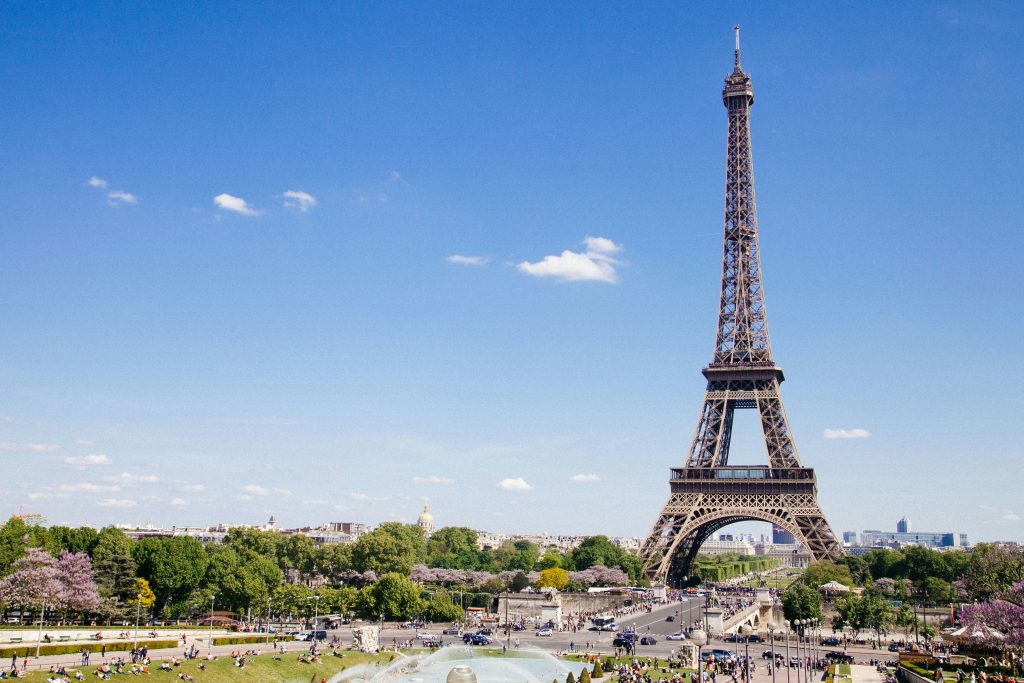
Many travelers ask where is Eiffel Tower located. In fact, you will find it in the 7th arrondissement, on the Champ de Mars. It stands along the left bank of the Seine. Just across the river, the Trocadéro gardens frame one of the most famous views in Paris.
City planners deliberately chose this open space for the 1889 Exposition Universelle. The wide lawns allowed engineers to assemble a 300-metre iron structure. At the same time, the clear surroundings ensured it would dominate the skyline. From the start, visibility shaped its role in the city.
Today, as a result, the tower anchors one of the busiest areas in the capital. The Seine, the Champ de Mars, and the long perspective toward the École Militaire place it firmly at the heart of Paris.
Why Was the Eiffel Tower Built?
In 1889, France hosted a world fair to mark one hundred years since the French Revolution. Therefore, the government sought a structure that would display industrial skill on a global stage. Gustave Eiffel secured the commission, while engineers Maurice Koechlin and Émile Nouguier developed the concept. Architect Stephen Sauvestre refined its final form.
Construction began in January 1887 and ended in March 1889 after two years, two months, and five days of work. Yet public opinion remained divided. Many writers and artists criticized the iron design and questioned its artistic value. For this reason, officials granted the tower a permit for only twenty years.
However, scientific research changed its fate. Experiments at the summit proved the tower could serve practical purposes beyond exhibition.
Engineering and Architectural Facts

Several Eiffel Tower top facts highlight its precision. Engineers assembled 18,038 iron components using around 2.5 million rivets. When it opened, the tower stood just over 300 metres tall. At that moment, it became the tallest building in the world.
The metal framework weighs roughly 7,300 tons. Because iron expands and contracts with temperature changes, the tower can vary in height by up to 15 centimetres between winter and summer. In addition, crews repaint the structure about every seven years to protect it from corrosion. Including antennas, it now reaches 324 metres. Each year, it welcomes close to seven million visitors.
The Scientific Role That Secured Its Future
From the beginning, Gustave Eiffel promoted research. In 1898, engineers carried out wireless telegraph tests between the tower and the Panthéon. As a result, radio communication advanced in France. During the First World War, operators intercepted enemy messages from this height. Later, in the 1920s, regular radio broadcasts transmitted from its upper levels. Today, antennas continue to send television and radio signals across the region.
Taken together, these Eiffel Tower facts show that the monument served as a communications center as well as a landmark.
More than 300 million people have visited since 1889, and its silhouette still defines how the world imagines Paris. When you explore the tower with historical context, the visit gains depth and meaning. To experience it with expert guidance and careful planning, contact My Private Paris to design a tailored visit that fits naturally into your stay.